Showing posts with label Charlotte Smith. Show all posts

Monday, 9 November 2015

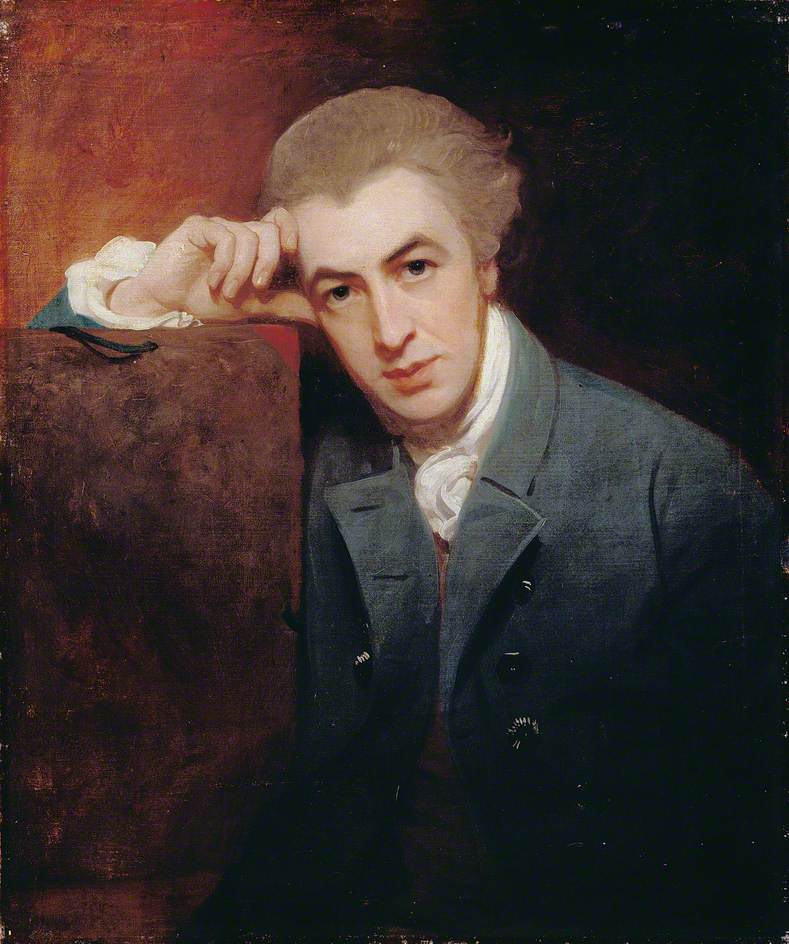
Happy 270th birthday, William Hayley

As it's Hayley's 270th birthday today, I thought I'd write a quick celebratory post on why – despite his relative obscurity– he's both worth writing about, and an appropriate subject for the new approach to biography I'm attempting

Hayley…
  • was the first person to publish any of Dante's work in English translation
  • wrote one of the late eighteenth century’s bestselling self-help books: The Triumphs of Temper, advising young women on how to attract and keep a husband. Composed in rhyming couplets, it was modelled on Pope’s The Rape of the Lock
  • supported and championed writing by women, reputedly praising Mary Wollstonecraft's A Vindication of the Rights of Woman and negotiating book deals for Charlotte Smith
  • persuaded William Blake to leave London for Sussex, and probably saved his life by providing both financial and personal support before and during his trial for sedition – a capital offence. He also provided inspiration (but not in the way he hoped) for Blake's prophetic poetry
  • turned down William Pitt's offer of the poet laureateship in 1790 because of "the absurd duties annex’d to the office" and "the very shattered state of my own Health & Faculties"
  • was an amateur doctor with an active and practical interest in the relationship between creativity and mental illness, who provided medical assistance to the villagers around his home in Eartham and both supported and attempted to cure William Cowper, George Romney and Joseph Wright of Derby of their mental health problems. He had much less success with his wife Eliza's "marvellous mental infelicities".
  • was an early adopter of medical technologies: particularly the "electrical machine" and the cold shower bath
  • had an interesting personal life: whilst supportive of women professionally, his behaviour in his most intimate relationships with his wives Eliza and Mary (Wellford) and the mother of his child (Mary Cockerell) wasn't as blameless as his Memoirs show he'd like us to believe
  • was a consumate networker who understood that by assisting and advancing the careers of his friends, he would also do no harm to his own
  • was realistic about the extent and limitations of his own talents
  • was probably instrumental in saving the manuscript of Christoper Smart's Jubilate Agno
    It was this last  point that first sparked my interest in William Hayley: according to the first editor of Smart's poem – William Force Stead – Hayley and Thomas Carwardine, both friends of Cowper
    "regarded this manuscript by the demented Smart as a fair specimen of the nature of poetic insanity, and therefore of some value when they were dealing with Cowper, who had been attacked by the same disease."
    Some twenty years on, I'm still fascinated by him, his relationships and the way he worked.

    Happy 270th birthday, William Hayley.

    Friday, 16 October 2015

    Relationship mapping, power and influence

    I've finally got round to starting to map William Hayley's relationships. I realised fairly quickly that I'd drive myself nuts if I tried to do them all at the same time, so I've gone for three categories: family, friendships and work. So far I've had a bash at family and friendships

    Naturally the different types of relationship overlap, so some people – including Hayley's first wife Eliza, his son Thomas Alphonso, and Tom's mother, Mary Cockerell appear in both.

    Two issues troubled me during the mapping process: time and power/influence.

     Time, power and influence

    The only nod I've made to the former is by putting the descriptors of relationships with William Hayley's father and brother – both of whom died while he was very young – in the past tense and in pink. More on time in a bit…
    I've signalled the different degrees of power and/or influence in the relationships by using
    • bi-directional straight arrows and reddish-brown text for relationships which seem/feel equal 
    • uni-directional straight arrows coming from the individual with greater power/influence in the relationship plus blue text
    • uni-directional curved arrows coming from the individual with lesser power/influence in the relationship, plus blue text.
    I've only deviated from this is in the (family) relationship between Eliza Hayley and Mary Cockerell. Although Mary was Eliza's servant, it was William Hayley who, ultimately, had control over both women: control he exerted on at least one occasion, post-separation, when Eliza challenged his authority. There were also times when Eliza depended on Mary for care and companionship and, even – in once instance (also after the couple had separated) when both women were lodging together in Derby – for sourcing food.

    The only other fact I want to highlight at this stage, is that there are, unsurprisingly, more asymmetric power/influence relationships amongs family than there are amongst friends, and that the distribution is – even less surprisingly – gendered.

    But, as I've already indicated, the two masses of text and squiggles below don't show how relationships evolve, wax and wane over time.

    A "Dislikes" arrow?

    I need to do something more sophisticated and (almost certainly) animated to evoke these changes, to demonstrate the way marriages, deaths and fallings-out impact on friendships and family relationships: to highlight emnity as well as amity. I'm thinking here not only of William Blake's initial attraction to, and sympathy for Hayley crystallising into fury and frustration at the latter's attempts to direct his work, then, ultimately relaxing into gratitude at Hayley's successful efforts to ensure he was acquitted at his trial for sedition. I'm also wondering how to represent, say, the poet Anna Seward's disapproval and violent criticism of poet and novelist Charlotte Smith's work. Both women were close to Hayley at one time or another, with Hayley even negotiating on Smith's behalf with her publisher. Seward eventually, angered Hayley, by writing about Eliza in a way Hayley considered both unkind and – given her privileged knowledge of Eliza's mental health issues – a betrayal.

    And I'm also thinking about how to represent the relationship between Hayley and Reverend John Johnson: Cowper's relation and carer. Although Hayley would have considered Johnson a "confidential" friend, a couple of comments in Johnson's letters to others, along with a few of his editorial markings on the manuscript

    Finally, before I finish I'd like to critique the terms I've used to define the relationships. They are all possessive: hasWife; hasFriend; hasEmployer. I should have used isHusbandOf; isFriendOf; isEmployeeOf. But they are also too static for my liking. The next thing I need to understand is how to model flow.

    Narrative flow, relationship flux and nuclear reactors

    Think I need to ask my friend who used to design software for nuclear reactors… Meanwhile, here's where I've got to so far…