Showing posts with label Dante. Show all posts

Monday, 9 November 2015

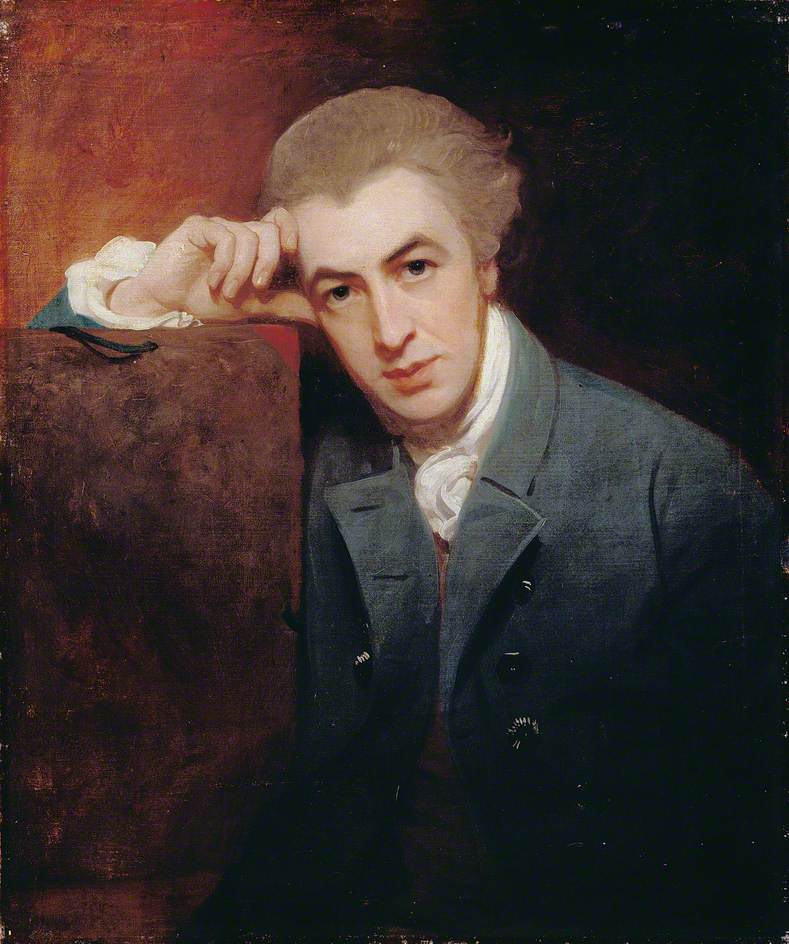
Happy 270th birthday, William Hayley

As it's Hayley's 270th birthday today, I thought I'd write a quick celebratory post on why – despite his relative obscurity– he's both worth writing about, and an appropriate subject for the new approach to biography I'm attempting

Hayley…
  • was the first person to publish any of Dante's work in English translation
  • wrote one of the late eighteenth century’s bestselling self-help books: The Triumphs of Temper, advising young women on how to attract and keep a husband. Composed in rhyming couplets, it was modelled on Pope’s The Rape of the Lock
  • supported and championed writing by women, reputedly praising Mary Wollstonecraft's A Vindication of the Rights of Woman and negotiating book deals for Charlotte Smith
  • persuaded William Blake to leave London for Sussex, and probably saved his life by providing both financial and personal support before and during his trial for sedition – a capital offence. He also provided inspiration (but not in the way he hoped) for Blake's prophetic poetry
  • turned down William Pitt's offer of the poet laureateship in 1790 because of "the absurd duties annex’d to the office" and "the very shattered state of my own Health & Faculties"
  • was an amateur doctor with an active and practical interest in the relationship between creativity and mental illness, who provided medical assistance to the villagers around his home in Eartham and both supported and attempted to cure William Cowper, George Romney and Joseph Wright of Derby of their mental health problems. He had much less success with his wife Eliza's "marvellous mental infelicities".
  • was an early adopter of medical technologies: particularly the "electrical machine" and the cold shower bath
  • had an interesting personal life: whilst supportive of women professionally, his behaviour in his most intimate relationships with his wives Eliza and Mary (Wellford) and the mother of his child (Mary Cockerell) wasn't as blameless as his Memoirs show he'd like us to believe
  • was a consumate networker who understood that by assisting and advancing the careers of his friends, he would also do no harm to his own
  • was realistic about the extent and limitations of his own talents
  • was probably instrumental in saving the manuscript of Christoper Smart's Jubilate Agno
    It was this last  point that first sparked my interest in William Hayley: according to the first editor of Smart's poem – William Force Stead – Hayley and Thomas Carwardine, both friends of Cowper
    "regarded this manuscript by the demented Smart as a fair specimen of the nature of poetic insanity, and therefore of some value when they were dealing with Cowper, who had been attacked by the same disease."
    Some twenty years on, I'm still fascinated by him, his relationships and the way he worked.

    Happy 270th birthday, William Hayley.

    Monday, 5 May 2014

    Introducing William Hayley

    Although now – unless you’re a Blake aficionado or an 18th century specialist – you’re unlikely to have heard of William Hayley (1745-1820), in his time he was highly influential.

    Alongside reams of poetry, a dozen or so unsuccessful plays, a slew of verse and prose essays (he was the first person to publish any of Dante’s work in English), and one novel, Hayley wrote one of the late eighteenth century’s bestselling self-help books: The Triumphs of Temper, advising young women on how to attract and keep a husband. It was written in rhyming couplets and modelled on Pope’s The Rape of the Lock.

    Despite this success, his own marriages – he wed twice – were not happy. His first wife, who, in his memoirs he often describes as his “pitiable Eliza”, suffered from “marvellous mental infelicities”  which, in Hayley’s telling, led, ultimately, to their separation.

    Little is known of his second marriage, except that it lasted under four years and ended with a case in the Doctors’ Commons. However, I’m in the process of trying to decipher a heavily redacted letter Hayley wrote to a friend in 1816 in which he describes himself as having been lured or tricked

    into a calamitous marriage by a subtle plot between two beautiful sisters & a hypocritical Presbyterian all of whose artful machinations [illegible] I have lately discovered

    More to follow when I’ve completed my detective work.

    Hayley also functioned as an amateur doctor, treating the villagers around his home in Eartham, Sussex, where he was well loved, and was proud of never having killed anyone.

    He also had a particular interest in the relationship between mental health issues and creativity, and took an active part in supporting, and attempting to cure, William Cowper, George Romney, Joseph Wright of Derby and Charlotte Smith amongst others (he also, on occasion, negotiated book deals for Smith).

    Hayley coaxed William Blake to Sussex from London in 1800 and provided – as the antithetical element in Blake’s dialectical approach – inspiration for some of his prophetic poetry. It’s also likely that, in standing bail for Blake when he was tried for sedition in 1804, hiring a lawyer and speaking for him in court, he saved the visionary’s life. Sedition, after all, carried the death penalty.

    For a combination of political and health reasons, in 1790 Hayley turned down Pitt’s offer of the poet laureateship. After his own, unpleasant experiences at school – he nearly died at Kingston Grammar and was bullied and beaten at Eton – he paid close personal attention to the education of his son Thomas Alphonso (whose mother was neither of Hayley’s wives), which was mostly undertaken at home in Eartham, West Sussex where he also tutored some of his friend and neighbour, Lord Egremont’s children.

    He died aged 75 in 1820.